7 Best Push Back Storage Racks for Warehouses

Time:2026-10-02 Author:Sophia
0%

Choosing the right rack system can reshape warehouse capacity, picking speed, and daily safety. This guide reviews seven of the best Push-Back Storage racks for modern warehouses.

Push-back racks use nested carts or wheeled pallets to store several pallets behind one another. Forklifts load and retrieve pallets from a single aisle, reducing travel and saving valuable floor space. They suit warehouses handling multiple pallets per SKU, especially when strict first-in, first-out rotation is not required. Still, higher density is not automatically better. Poorly matched rack depth can hide slow-moving stock and complicate inventory checks.

Warehouse management author Gwynne Richards wrote, “The warehouse is no longer just a place to store goods; it is a key part of the supply chain.” That principle matters here. A rack should support product flow, not merely create taller storage. Each option in this review is considered against load capacity, pallet dimensions, cart design, lane depth, installation quality, and operator visibility. Safety features also matter, including impact protection, guide rails, and clear load ratings.

Real warehouses are rarely perfect. One site may need maximum density, while another needs faster access and simpler replenishment. Budget, ceiling height, forklift type, and product turnover can change the best choice. We will examine those trade-offs closely, including limitations that manufacturers may understate. The right Push-Back Storage system should make space work harder without making workers work blindly.
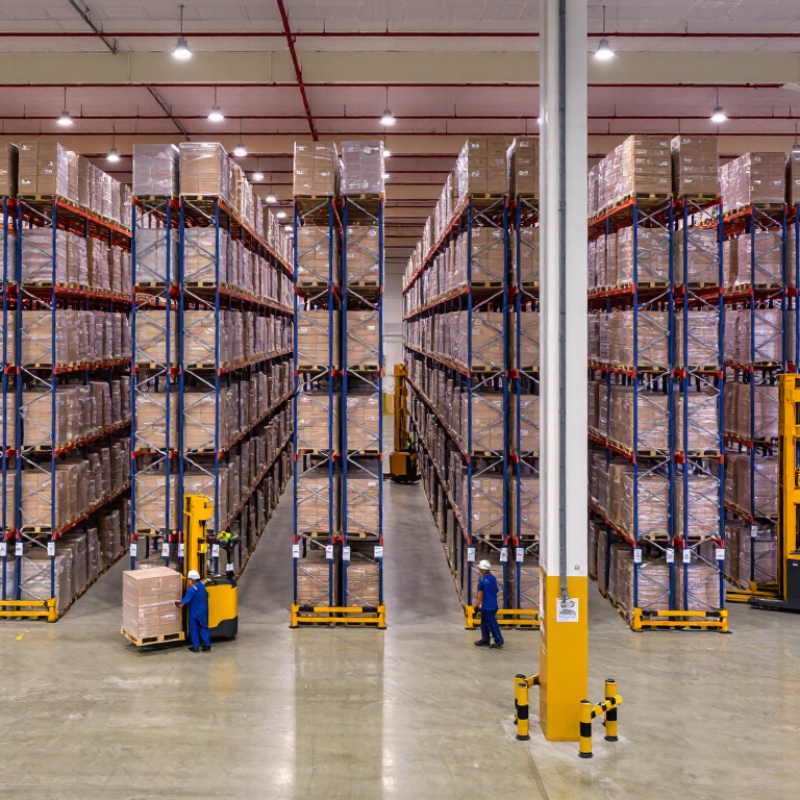
7 Best Push Back Storage Racks for Warehouses

What Are Push-Back Storage Racks?

Push-back storage racks are a high-density pallet system designed for warehouses with limited floor space. They use inclined rails, carts, or nested platforms to move pallets toward the aisle. When an operator loads a new pallet, it gently pushes stored pallets deeper into the lane. Removing the front pallet allows the others to roll forward under controlled movement.

Unlike standard selective racking, this system usually stores several pallets in one lane. It supports last-in, first-out inventory flow, which suits products with stable shelf lives. However, it is not ideal for every warehouse. Fast-expiring goods may need a first-in, first-out system instead. That distinction is easy to miss.

Tips: Check pallet dimensions, load weights, and forklift clearance before choosing a rack. Measure the aisle twice. Small errors can create daily handling problems. Ask a qualified rack engineer to verify beam capacity, rail alignment, and floor conditions. Operators should receive practical training, including safe loading speeds and inspection routines. Damaged carts, bent frames, or uneven rails require immediate attention. A visual check at the start of each shift is simple, but often neglected. Also, keep clear labels on every lane and leave emergency access unobstructed. The best push-back rack depends on product rotation, pallet quality, ceiling height, and handling equipment. Cost alone is a weak measure.

How Push-Back Racking Systems Operate

Push-back racking stores multiple pallets in one lane, using inclined rails and nested carts. The forklift places a pallet on the nearest cart, then gently pushes it backward. Gravity returns the carts toward the aisle when pallets are removed. The system usually follows a last-in, first-out flow. That makes it useful for dense storage, but less suitable for products requiring strict first-in, first-out rotation. Small details matter. Pallet dimensions, load weight, rail angle, and cart condition must match the design.

MHI’s 2024 Annual Industry Report surveyed more than 1,100 supply-chain professionals and reported that labor shortages remain a major operational challenge. Push-back storage can reduce travel distance and improve cubic utilization, but it does not remove handling risks. Operators still need clear aisle rules, training, and routine inspections. The Occupational Safety and Health Administration reports that forklift incidents cause about 85 workplace fatalities and 34,900 serious injuries annually in the United States. Rack beams, guides, and stops deserve equal attention. One damaged component can affect every pallet behind it.

In daily use, the forklift should enter squarely and avoid sudden braking. Loads should sit evenly on the pallet. That sounds obvious. It is often missed. A practical inspection can check rail movement, pallet overhang, cart alignment, and visible impact damage. The design may look efficient on paper, yet poor sequencing can create hidden aging stock. Warehouse teams should test real pallet flows before expanding the system. MHI’s data supports wider automation interest, but human judgment still controls safe loading and inventory discipline.

How Push-Back Racking Systems Operate

Push-back racks typically store two to six pallets deep on inclined rails. Each lane generally follows a last-in, first-out (LIFO) sequence: loading a new pallet pushes the existing pallets toward the rear, while unloading allows the front pallet to roll forward.

How to read the chart: As lane depth increases, storage positions per lane increase, but more pallets must be moved or accessed sequentially before reaching the rear position. Actual capacity depends on pallet dimensions, load weight, rack height, aisle width, and local safety requirements.

Seven Top Push-Back Rack Options for Warehouses

Seven Top Push-Back Rack Options for Warehouses

Push-back racks improve pallet density while preserving selectivity. The 2024 Annual Industry Report from the Material Handling Institute surveyed 1,850 professionals. It found that 55% expected artificial intelligence adoption within one to two years. That shift makes measurable storage performance increasingly important.

Option one is a two-deep system for fast-moving pallets and simple forklift access.

Option two adds three-deep storage for better density without excessive retrieval depth.

Option three uses four-deep lanes where inventory turnover is moderate.

Option four reaches five-deep capacity, but operators need disciplined stock rotation.

Option five uses standard carts for stable, uniform pallets.

Option six uses nesting carts for mixed loads and flexible lane changes.

Option seven combines different depths across one warehouse zone.

Experienced planners should check pallet weight, load dimensions, aisle width, and forklift reach. The 2023 Warehousing Education and Research Council benchmarking report highlights labor efficiency and space utilization as recurring performance priorities. Push-back racks can support both, but only when lane loading remains consistent.

A practical test helps.

Place a loaded pallet at the lane entrance. Watch cart movement and clearance. Small errors matter.

I would not treat deeper storage as automatically better. It may hide aging inventory, complicate counting, and increase impact risk. Rack inspections, visible load limits, and operator training should guide the final choice.

How to Choose the Right Push-Back Rack

How to Choose the Right Push-Back Rack

Choosing a push-back rack starts with your pallet details, not the rack’s appearance. Measure pallet length, width, height, and loaded weight carefully. Include packaging that may bulge beyond the pallet edge. A narrow lane can save floor space, but it may slow loading when operators have limited visibility. Check forklift clearance, aisle width, ceiling height, and slab condition before approving a layout. The rack must support the intended load at every storage level, not only the average pallet. During warehouse assessments, I have seen small measurement errors create costly rework. That lesson is easy to forget.

Decide whether last-in, first-out storage suits your inventory. Push-back systems usually favor high-density storage and fewer product changes. They may be unsuitable for goods requiring strict rotation or frequent picking. Compare lane depth with daily volume, pallet variety, and replenishment patterns. Also review safety features, inspection access, impact protection, and local engineering requirements. A rack can look efficient on paper yet perform poorly beside a busy dock. Leave room for training and future changes. Perfect utilization is rarely realistic.

Tips: Test one lane with actual pallets and equipment. Watch the cart movement. Record loading time, retrieval effort, and damaged packaging. Ask operators what feels awkward. Their feedback may expose a design weakness before installation.

Safety, Installation, and Maintenance Requirements

Selecting the seven best push-back storage racks requires more than load capacity. Safety begins with a documented site assessment, accurate pallet weights, and clear aisle measurements. BLS 2023 data reported 4.8 recordable cases per 100 full-time workers in transportation and warehousing. That figure deserves attention. OSHA identifies falling materials, struck-by incidents, and unstable loads as major warehouse hazards. Installers should verify floor strength, rack anchoring, seismic conditions, and forklift clearance before assembly.

Use components designed and installed under ANSI MH16.1 requirements. Each bay needs visible load ratings, upright protection, and controlled pallet placement.

Push-back carts must move smoothly without binding. Workers should test each lane with an empty pallet before loading products.

A small alignment error can create damaging friction. It is easy to overlook.

Maintenance inspections should cover beams, braces, pins, wheels, rails, decking, and anchor points. Inspect high-impact areas daily, then complete a documented formal review at least monthly, or more often in busy facilities.

Remove damaged parts from service immediately. Do not straighten bent uprights in the aisle.

RMI guidance emphasizes qualified evaluation and manufacturer-approved repairs, even when the damage appears minor.

Supervisors should retrain operators after layout changes, collisions, or repeated pallet failures. A clean checklist helps, but it cannot replace walking the rack line with a flashlight.

FAQS

How does a push-back racking system work?

Forklifts place pallets on nested carts and inclined rails. The next pallet gently pushes the first one backward. Gravity moves the carts toward the aisle when pallets are removed. It is simple, but poor loading can disrupt the lane.

What inventory flow does this system usually support?

It usually follows last-in, first-out inventory flow. That suits products with flexible rotation requirements. It may not suit goods needing strict first-in, first-out control. Hidden aging stock remains possible.

What pallet details must be checked before installation?

Confirm pallet size, weight, condition, and overhang limits. Rail angles and cart capacity must match those details. Not every pallet fits. A small mismatch can create friction or instability.

Can push-back racking reduce warehouse labor?

It can reduce forklift travel and improve cubic storage use. Workers may handle more pallets within a compact area. It does not remove handling risks. Clear aisles and trained operators remain necessary.

How should forklifts load pallets safely?

The forklift should enter the lane squarely. Operators should avoid sudden braking and uneven placement. Pallets must sit fully and evenly on the carts. That sounds obvious. It is often missed.

What should a routine inspection include?

Check rails, wheels, carts, pins, beams, braces, and anchor points. Look for binding, misalignment, bent parts, and impact marks. Inspect busy areas every day. Record a formal review at least monthly.

What should workers do after rack damage or a collision?

Stop using the affected lane immediately. Keep damaged components out of service. Do not straighten bent uprights inside the aisle. A qualified person should evaluate the damage and approve repairs.

What installation conditions require special attention?

Verify floor strength, anchoring, seismic conditions, and forklift clearance. Install visible load ratings and upright protection. Test every lane with an empty pallet first. Paper plans can look perfect. Real pallet movement may disagree.

Conclusion

Push-Back Storage racks are high-density pallet storage systems designed to improve warehouse capacity while keeping products organized and accessible. Instead of requiring a separate forklift aisle for every pallet position, these racks use inclined lanes and carts or nested frames that move pallets toward the front as inventory is loaded or removed. This last-in, first-out arrangement is especially useful for storing multiple pallets of the same product and maximizing vertical and floor space.

This guide reviews seven practical push-back rack options for different warehouse layouts, load requirements, and operating conditions. It also explains how to choose the right system by considering pallet dimensions, weight capacity, aisle width, storage depth, rotation needs, and equipment compatibility. Proper installation, routine inspections, load labeling, frame protection, and operator training are essential for safe and reliable performance. With the right design and maintenance plan, a push-back system can increase storage density, streamline material handling, and support more efficient warehouse operations.

Sophia

Sophia

Sophia is a dedicated marketing professional with an exceptional depth of knowledge about her company's products and services. With a keen understanding of market trends and customer needs, she crafts insightful blog posts that not only inform but also engage readers, enriching the company’s online......