7 Carton Flow Storage Tips for Global Buyers

Time:2026-10-17 Author:Charlotte
0%

Carton Flow Storage can improve picking speed, stock rotation, and space efficiency in busy warehouses. Yet the right system depends on more than aisle width or carton size. Global buyers must examine product weight, packaging strength, loading methods, and local operating conditions before approving a design.

This guide presents seven practical tips drawn from warehouse planning, supplier discussions, and real installation concerns. It explains how to check roller pitch, lane depth, load ratings, FIFO suitability, and replenishment access. Small details matter. A weak carton base may sag between rollers. An unsuitable brake roller may allow cartons to move too quickly. These issues can create delays, damage, or unsafe handling.

Reliable purchasing also requires clear technical documents. Buyers should request drawings, material specifications, test information, installation guidance, and maintenance recommendations. Supplier claims should be compared with measurable requirements and relevant regional safety expectations. Compliance obligations can differ between countries, so local professionals should review the final solution.

No layout is perfect. A design that works in one warehouse may fail after product sizes change. Even experienced teams can overlook seasonal demand or operator comfort. That is why pilot testing matters. Load several lanes, observe replenishment and picking, and record problems before placing a large order. Carton Flow Storage should support people, products, and long-term operating goals—not simply fill available floor space.
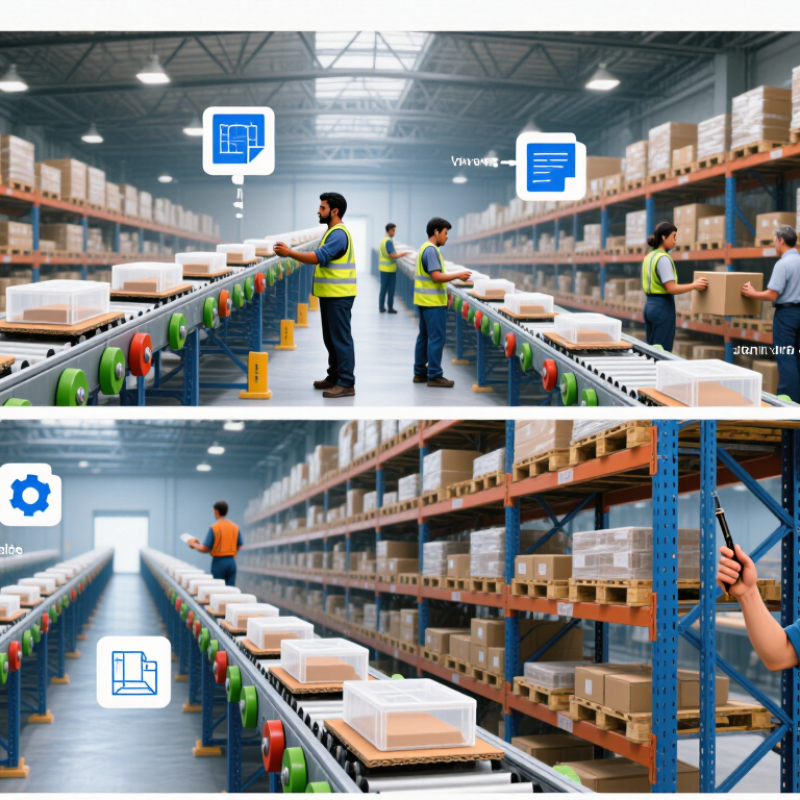
7 Carton Flow Storage Tips for Global Buyers

Understanding Carton Flow Storage and Its Global Buying Requirements

Carton flow storage uses inclined roller lanes to move cartons toward the picking face. It supports fast replenishment and clearer stock rotation. Global buyers should confirm carton length, width, weight, and base condition before requesting quotations. Small carton changes can affect lane performance. Ask for adjustable guides and lane dividers. These features handle product variation during seasonal demand.

Warehouse conditions also matter. Check the operating temperature, humidity, floor level, and available ceiling height. In humid regions, surface protection deserves close attention. In colder areas, some wheels and lubricants may perform differently. Request load tests, installation drawings, and maintenance instructions. Verify whether local technicians can replace rollers and braking parts. A distant service response can create expensive delays.

International purchasing requires more than comparing unit prices. Review packing methods, shipping dimensions, import documents, spare-part lists, and installation responsibilities. Confirm whether the system follows recognized safety and material standards. Ask for a sample lane or a practical performance test when possible. I once trusted estimated carton data, and the real boxes slid unevenly. That assumption failed. Buyers should also calculate labor savings, storage density, and future expansion costs. A low initial price may hide difficult assembly or limited adjustment. Clear acceptance criteria make supplier discussions more reliable, even when forecasts remain imperfect.

Assessing Warehouse Needs, Carton Sizes, and Load Characteristics

7 Carton Flow Storage Tips for Global Buyers
Assessing Warehouse Needs, Carton Sizes, and Load Characteristics

Carton flow storage should begin with the warehouse, not the rack catalogue. Measure aisle width, ceiling height, picking zones, and replenishment routes. Record daily carton volume and peak-season demand. A system sized for average activity may fail during a holiday surge. Leave service space around conveyors, columns, and emergency exits. Small omissions can create expensive delays.

Carton dimensions must be measured when packed, not when empty. Note length, width, height, weight, and surface texture. Test the largest and smallest cartons on sample rollers. Smooth cartons may accelerate too quickly, while soft packages can stop halfway. A braking roller or adjustable lane pitch may be necessary. Do not assume every carton will behave consistently.

Load characteristics also affect lane design. Heavy cartons need stronger rollers and stable frames. Fragile goods require controlled movement and gentle stopping. Dust, humidity, and temperature changes can reduce performance over time. Buyers should request load ratings, material specifications, and inspection guidance from qualified suppliers. A documented test with real cartons is more reliable than a polished drawing. We sometimes overfocus on maximum capacity and overlook operator reach. That mistake deserves another review.

Selecting the Right Carton Flow Rack Design and Components

Selecting the right carton flow rack begins with the carton, not the frame. Measure carton width, depth, height, weight, and bottom stiffness under real warehouse conditions. Then choose lane width, roller pitch, and divider spacing. Seven checks matter: load stability, product dimensions, replenishment speed, pick frequency, access height, safety clearance, and future flexibility. A carton that looks rigid in a sample room may sag after weeks of storage.

MHI’s 2024 Annual Industry Report found that 55% of supply chain leaders planned to increase technology investment. That pressure makes simple, scalable rack components valuable. Use adjustable rails for changing carton sizes, corrosion-resistant finishes in humid areas, and replaceable rollers where maintenance access is limited. Flow lanes should support smooth movement without launching cartons toward the operator. A brake or speed controller may be necessary for heavier loads.

Ergonomics also deserves attention. The U.S. Bureau of Labor Statistics reported 2.6 million nonfatal workplace injuries and illnesses in private industry during 2023. Rack height, replenishment access, and clear picking angles can reduce unnecessary reaching and twisting. Test the design with full cartons, not empty samples. I would not assume the first layout is efficient. Observe replenishment, picking, jams, and damaged packaging for several days. Small mistakes often appear only after peak volume begins. Reliability comes from documented load limits, inspection routines, and components that can be replaced without dismantling the entire rack.

7 Carton Flow Storage Tips for Global Buyers - Selecting the Right Carton Flow Rack Design and Components

Tip Design Dimension Recommended Specification or Data Range Why It Matters Buyer Verification Checklist
1Match the rack to carton dimensions Carton length, width, height, and weight Design each lane for the full carton range. Common carton-flow lanes are approximately 300–1,200 mm wide, with carton loads often ranging from 5–50 kg per carton. Correct dimensional matching prevents cartons from binding, turning sideways, falling between rollers, or exceeding the rated capacity. Provide the smallest, average, and largest carton dimensions; confirm the maximum carton weight, base shape, and load stability.
2Select the correct lane slope Gravity-flow inclination Start with approximately 3°–10°. Lighter or smooth-bottom cartons may require more slope, while heavy cartons or high-speed applications may require less slope with braking control. The slope must provide reliable forward movement without causing excessive impact, carton damage, or uncontrolled acceleration. Request a sample-carton test at the proposed load condition. Confirm that cartons move consistently from the loading side to the picking side.
3Use suitable roller spacing Roller pitch and carton support A practical starting point is to maintain at least three supporting rollers beneath the carton at all times. Roller pitch commonly falls within approximately 50–100 mm, depending on carton base rigidity and weight. Adequate support reduces carton sagging and improves smooth travel, especially for flexible corrugated boxes or narrow cartons. Check the carton base for gaps, flaps, or weak areas. Confirm roller diameter, pitch, axle strength, and the number of contact points.
4Build in FIFO functionality Lane depth and stock rotation Use separate loading and picking faces. Typical lane depths are approximately 1,200–3,000 mm, depending on the number of cartons required per SKU. A front-pick and rear-load arrangement supports first-in, first-out rotation and reduces the need to reach through older stock. Calculate required cartons per SKU, daily demand, replenishment frequency, and the minimum presentation quantity at the picking face.
5Choose appropriate flow components Rollers, wheels, guides, dividers, and brakes Use steel or polymer rollers according to load and environment. Add lane dividers for SKU separation, side guides for carton alignment, and speed controllers where carton momentum is high. Components should match the carton base, operating temperature, cleaning conditions, and expected handling frequency. Confirm component material, corrosion resistance, replacement availability, rated load, wheel or roller service life, and compatibility with the carton surface.
6Verify structural load capacity Beam, upright, lane, and shelf capacity Specify the rack for the maximum distributed load, not the average load. Include carton weight, lane quantity, shelf levels, impact allowance, and any local safety factor required by the installation standard. A rack can be overloaded even when individual cartons are within limits if several lanes or levels are filled simultaneously. Obtain a written load chart, confirm allowable load per level and bay, review anchor requirements, and verify the floor's permissible load.
7Plan safety, access, and maintenance Ergonomics, inspection, and operating clearance Keep picking heights within a comfortable working zone where possible, provide accessible replenishment aisles, and include end stops, back stops, labels, and safe load-retention features. Good access reduces handling risk, while visible identification and replaceable components help maintain reliable operation. Review local workplace regulations, aisle clearance, emergency access, rack protection, inspection frequency, spare-part lead time, and installation instructions.
Planning note: The dimensions and ranges shown are typical design starting points for carton flow systems. Final specifications should be validated through a sample-load test, structural calculation, site survey, and the safety requirements applicable in the installation country.

Planning Installation, Safety Features, and International Shipping

7 Carton Flow Storage Tips for Global Buyers

Tip 1: Confirm carton dimensions, weights, and case materials before selecting the rack.

Carton flow lanes perform best when products move smoothly without crushing. Measure the heaviest cartons, not only the average ones. A small calculation error can affect every lane. Leave practical space for labels, hand access, and replenishment.

Tip 2: Create an installation plan with accurate floor drawings and clear loading routes.

Check floor capacity, ceiling height, lighting, and emergency access before equipment arrives. Local technicians should verify anchoring and assembly requirements. Installation instructions may need translation. That detail is easy to underestimate. Allow time for customs clearance, damaged-package inspections, and replacement parts during international shipping.

Tip 3: Specify safety features before requesting quotations.

End stops, lane dividers, guardrails, and back supports can reduce falling-carton risks. Operators should reach products without stretching across active lanes. Mark maximum loads where workers can see them. Train the team after installation, not only during delivery. A photo-based checklist helps overseas managers inspect each section consistently. It is not perfect, but it catches loose hardware, uneven rollers, and blocked aisles before daily use. Keep spare rollers and fasteners locally when possible. That can shorten downtime.

Improving Stock Rotation, Maintenance, and Long-Term Performance

7 Carton Flow Storage Tips for Global Buyers
Improving Stock Rotation, Maintenance, and Long-Term Performance

Carton flow storage works best when gravity, packaging, and replenishment rules match. Zebra Technologies’ 2023 Warehousing Study reports that 76% of warehouse decision-makers feel pressure to modernize operations. That pressure makes durable, measurable design important. Tip 1: Measure carton dimensions and weight by SKU. Tip 2: Set FIFO lanes for dated or sensitive products. Tip 3: Load from the replenishment side and pick from the presentation side. Clear separation reduces unnecessary handling.

Maintenance protects stock rotation over many years. Tip 4: Inspect rollers, guides, frames, and labels monthly. Look for bent rails, dust buildup, and uneven movement. Tip 5: Test every lane with a real carton, not an ideal sample. A perfect carton rarely represents global packaging conditions. Tip 6: Keep spare rollers and lane dividers available locally. Small delays can stop a fast-moving lane. MHI’s 2024 Annual Industry Report found that 91% of supply chain leaders plan to invest in technology and innovation. Yet technology cannot repair poor housekeeping.

Tip 7: Track replenishment time, pick errors, blocked lanes, and damaged cartons. Review these measures quarterly by site and product family. GS1 guidance supports consistent identification and traceability across trading partners. Use standardized labels and location codes where possible. One practical warning remains: deeper lanes may increase capacity, but they can hide slow movers. Recheck slotting after seasonal changes. Long-term performance depends on disciplined adjustments, not installation alone.

FAQS

What measurements should be taken before selecting carton flow racks?

Measure carton width, depth, height, weight, and bottom stiffness. Use the heaviest cartons, not average cartons. Include space for labels, hand access, and replenishment.

How should lane width and roller spacing be selected?

Match lane width to the carton’s actual dimensions. Choose roller spacing that supports the carton without sagging. Test full cartons under normal warehouse conditions. Empty samples can mislead.

What safety features help prevent cartons from falling?

Use end stops, lane dividers, guardrails, and back supports. Add brakes or speed controllers for heavier cartons. Mark maximum loads where operators can see them. Cartons should not launch toward workers.

How can the rack design improve worker ergonomics?

Set rack heights for comfortable picking and replenishment. Keep clear picking angles and avoid deep reaching. Operators should not twist across active lanes. Small layout changes matter.

What should be checked before installation?

Confirm floor capacity, ceiling height, lighting, and emergency access. Prepare accurate floor drawings and clear loading routes. Local technicians should verify anchoring requirements. Check every aisle twice.

How can international installation and shipping risks be reduced?

Translate installation instructions when necessary. Allow time for customs clearance and package inspections. Plan for damaged parts and replacement components. A photo checklist helps remote teams find loose hardware or blocked aisles.

Which components support easier maintenance?

Choose replaceable rollers when access is limited. Use adjustable rails for changing carton sizes. Select corrosion-resistant finishes in humid areas. Keep spare rollers and fasteners nearby. This reduces downtime.

How should a new rack layout be tested?

Observe replenishment, picking, jams, and damaged packaging for several days. Test during realistic volume, not only quiet periods. The first layout may look efficient. It may not be. Document load limits and inspection routines after testing.

Conclusion

Carton Flow Storage is a practical solution for improving picking speed, stock visibility, and inventory rotation in warehouses serving global markets. Before purchasing, buyers should evaluate warehouse dimensions, carton sizes, product weights, loading patterns, order frequency, and expected future growth. These factors help determine the appropriate rack width, depth, roller or wheel configuration, lane capacity, and replenishment method. A well-matched design can support efficient first-in, first-out handling while reducing unnecessary movement and labor.

Global buyers should also consider installation requirements, adjustable components, safety features, packaging quality, and shipping conditions. Clear assembly instructions and compatible parts can simplify installation across different locations, while safeguards such as lane stops, back supports, and stable frames help protect workers and products. Regular inspections, cleaning, and replacement of worn components maintain smooth operation. With proper planning and maintenance, carton flow systems can deliver reliable long-term performance, improve stock rotation, and adapt to changing warehouse demands.

Charlotte

Charlotte

Charlotte is a seasoned marketing professional with a deep understanding of the company's portfolio and a passion for elevating its presence in the market. With a keen eye for detail and a commitment to excellence, she ensures that our professional blog is regularly updated with insightful articles......